| Journal of the POMA - Vol 70, No 3 - October 2026 |
From the Editorial Board
Loss
By Joseph Zawisza, DO, PCOM '05
When I took the helm of the Publications Committee two and a half years ago, one of the questions we as a committee wrestled with was whether each issue of the JPOMA should have a theme. Readers of this journal know that it is an eclectic publication, and distributing it digitally now, as well as having added a Creative section, has only further cemented that label. Since then, we have proceeded without a theme.
However, things change. As we started to develop this issue, we couldn’t help but notice that a theme emerged very clearly: change, loss, even death. The fact that this issue would be published at the end of October, a time of year along with the beginning of November that has traditionally been associated with these ideas through Halloween, fall, All Souls’ Day, and Día de los Muertos (Day of the Dead), made it all the more appropriate. Among the many pieces in this issue, you’ll read about “Workplace Violence Against Healthcare Workers,” a poem, “died in his sleep,” and the complementary “Requiem for the White Coat” and “Ode to the Prescription Pad.”
As we prepared with this theme in mind, we couldn’t have imagined that an even bigger change and loss would happen just two months before publication. Sadly, William G. Anderson, DO, FACOS, died on August 16, 2026. Dr. Anderson was a past president of the American Osteopathic Association and a friend to the Pennsylvania Osteopathic Medical Association, among countless other achievements. Worthy of an obituary in the New York Times, Dr. Anderson lived a life that this entire issue could not do justice to. Despite this, we have included a tribute to him in Dr. Garloff’s “When Pluto Was a Planet.” I had the privilege of meeting Dr. Anderson one year, introduced by another giant of the profession, Floyd Meachum, DO. He was a man whose tremendous contributions to our profession were outshone by his contributions to humanity, and still he spoke so humbly with me.
All change is not bad, though, of course. In this issue, we have also reintroduced the Clinical Writing Contest. Congratulations to Brett Cohen, DO, winner of this year’s Golden Quill Award! Having received numerous submissions, we intend to continue and expand this contest in coming years to highlight the research contributions that students, interns, and residents make to our profession.
I hope that you will enjoy this issue of the Journal of the Pennsylvania Osteopathic Medical Association.
|
Congratulations to POMA's 2026 Clinical Writing Contest Winners!
After a several-year hiatus, POMA was pleased to bring back its Clinical Writing Contest in 2026! Sponsored by POMA and funded by the POMA Foundation, the contest invited eligible osteopathic medical students, interns, and residents to submit original research, literature reviews, and case reports.
Congratulations to this year's winners, and thank you to everyone who participated! Stay tuned for information about the 2027 Clinical Writing Contest!
|
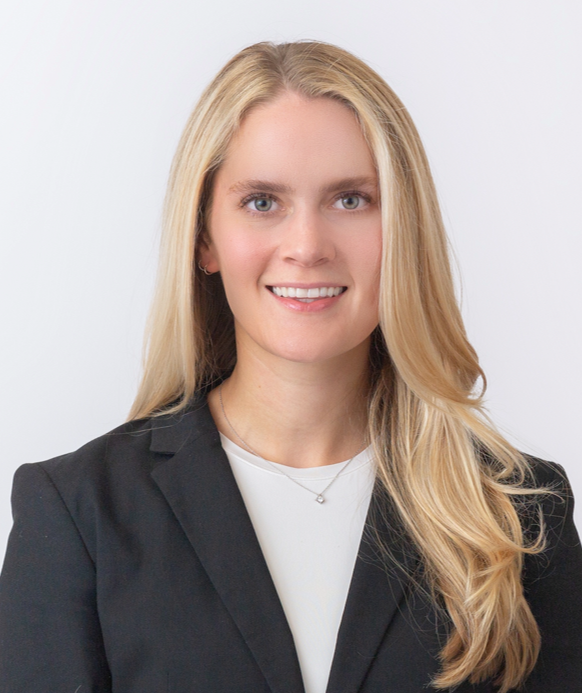
First Place (Golden Quill Award)
Who Gets the Cath Lab? Sex Differences in Primary Percutaneous Coronary Intervention and In-Hospital Mortality After ST-Elevation Myocardial Infarction in the National Inpatient Sample, 2016-2022
Submitting Author: Brett D. Cohen, DO
St. Luke's University Health Network, Internal Medicine Residency, Bethlehem, PA
Abstract
Background: ST-elevation myocardial infarction (STEMI) is a time-critical emergency in which primary percutaneous coronary intervention (PCI) is the guideline-recommended, life-saving treatment. Women have historically been under-recognized and undertreated in acute coronary care, but the contemporary national magnitude of the sex gap in primary PCI receipt, and how much that gap contributes to women's higher mortality, is not well quantified.
|
Second Place
Disability Education in Internal Medicine Residency Training: A Multi-Institutional Assessment of Resident Knowledge, Confidence, and Educational Needs
Submitting Authors:Smeet Madhani, DO (left); Nicole Marici, DO (right)
Mercy Fitzgerald Medical Center Residency, Darby, PA
Abstract
Background: Patients with disabilities constitute approximately one in four Americans, yet disability-specific education remains inconsistently implemented in internal medicine (IM) residency training(1). While prior research has documented curricular gaps at the program level, less is known about how these gaps manifest at the level of individual trainees.
|
Third Place
Pediatric Peanut Allergy Trends Following 2017 AAP Guidelines for Early Food Introduction and Patterns of Food Allergy Publication
Submitting Author: Andrea Jakubowski, OMS-IV
Lake Erie College of Osteopathic Medicine, Erie, PA
Abstract
Background:Pediatric peanut allergy is a significant public health concern with prevalence that has increased over the last two decades. The American Academy of Pediatrics (AAP) and the National Institute of Allergy and Infectious Diseases (NIAID) published guidelines in 2017 following results of the landmark LEAP trial recommending early peanut introduction for children between the ages of 4-6 months in order to prevent allergy. While clinical trials following guideline publication demonstrated efficacy, the population-level impact is currently unclear.
|
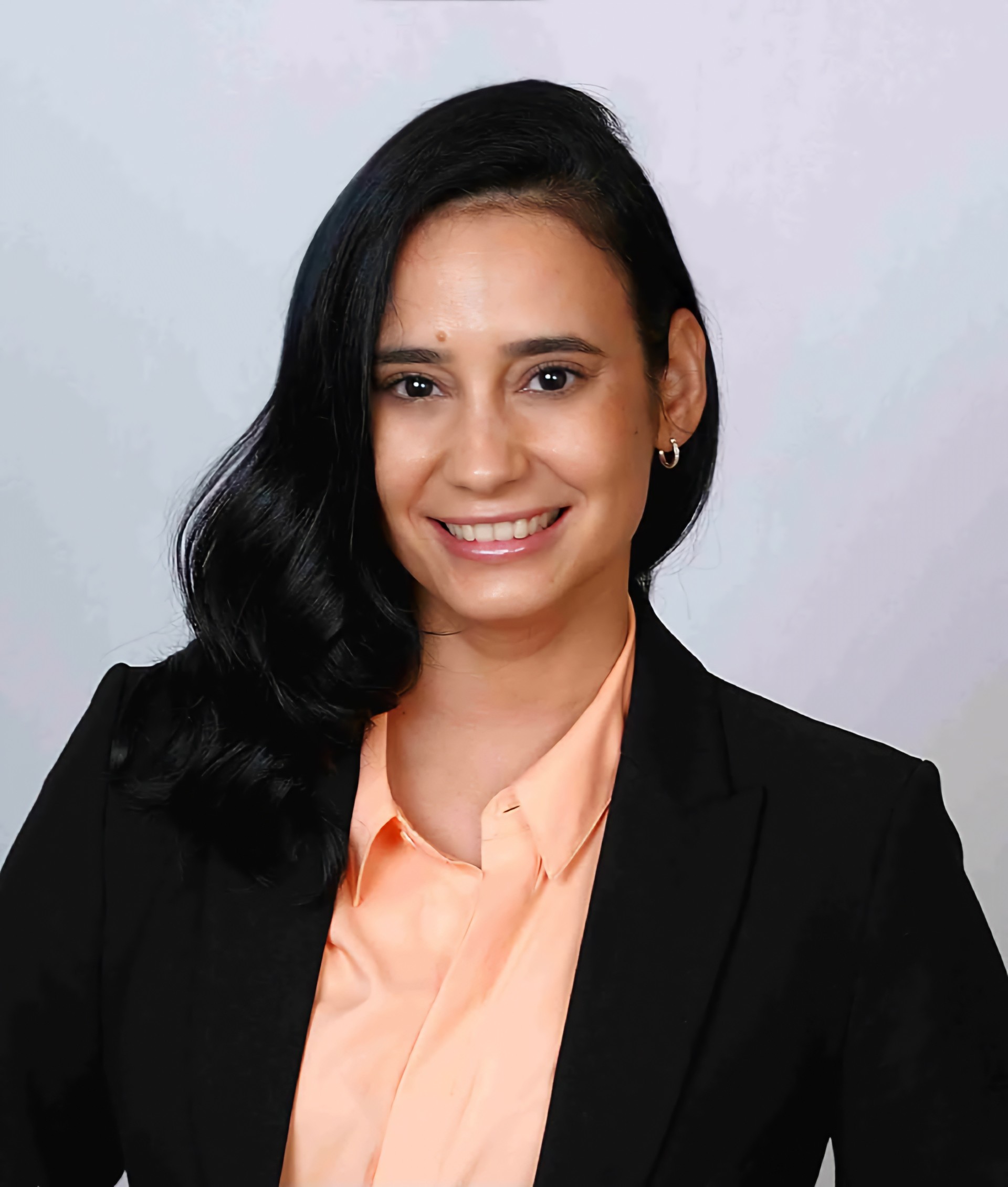
Honorable Mention
Butalbital-Containing Analgesics (Fioricet): Therapeutic Role, Misuse Potential, and Withdrawal Management Strategies
Submitting Author: MisleydiRios Rodriguez, MS, DO
St. Luke's University Health Network, Family Medicine Residency, Bethlehem, PA
Introduction
Butalbital-containing combination analgesics (BCCs), including formulations such as Fioricet (butalbital, acetaminophen, and caffeine), have historically been prescribed for the management of tension-type headaches and, less commonly, migraines [3,13,16]. Although their use has declined with the development of migraine-specific therapies and evolving clinical guidelines, BCCs remain encountered in contemporary clinical practice, particularly in emergency departments and primary care settings [3,16]. Their continued availability and prescribing persistence place clinicians at an ongoing risk of encountering complications related to misuse, dependence, and withdrawal [2,3].
|
Workplace Violence Against Healthcare Workers
By Charles Harvey, DO, FACOS, CPE
Let’s start with a quiz:
Which group of workers has the greatest risk of non-fatal acts of workplace violence?
- Corrections officers
- Law enforcement officers
- Construction workers
- Healthcare workers
|
The Role of Horticulture Therapy, Faith, and Structured Routines in Mitigating Depression Among Geriatric Nursing Home Residents: Observations from a Catholic-Based Facility
By Heidi Elnathan, OMS-IV, PCOM and Venice Saintilus, OMS-IV, PCOM
Nursing homes have a higher prevalence of depression due to social isolation, loss of independence, and feelings of worthlessness. Although this is a common issue throughout the United States, we saw how one Catholic-based nursing home used horticulture therapy to help alleviate these issues. Over the span of a year, we regularly interviewed the nuns living at this nursing home to observe how this project affected their mood and cognition. Horticulture therapy, defined as the use of plant-based activities to enhance physical and mental well-being, was complemented by the facility's community structure and spiritual focus, all of which contributed to improved quality of life among the residents.
|
Relevance
Originally published in the June 2011 issue of The Journal of the POMA
By Frank M. Tursi, DO, POMA Past President
The following is a transcript of an address delivered by Frank M. Tursi, DO, POMA's 100th president, to the POMA House of Delegates in June 2011.
While contemplating a topic to coincide with my being the 100th president of POMА, I decided on the topic of relevance. I wanted to consider some prior Erie POMA presidents and their relevance to both me and to POMA.
The dictionary describes relevance as having meaning/being pertinent or important to an issue or goal.
For today, I am not talking about personal relevance, but rather that of an organization. I am talking about professional/organizational relevance, more particularly, relevance as it pertains to POMA.
All professions go through three phases. There is the survival/foothold phase, the acceptance and growth phase, and then the decisive strengthening or disintegrative phase.
|
Ode to the Prescription Pad
By Joseph Zawisza, DO, PCOM '05
Thou pad a story great doth tell
Thine pages speak the doctor’s will
To help thy patient to be well
Few marks on thee fix most all ill
Archaic now the paper and pen
Functions better suited to EMR
To cyberspace goes our consumer’s health
No longer QOD, MSO4, and PRN
Type, search, point, click must be safer
But surely cause loss of providers’ knowledge wealth
|
Requiem for the White Coat & Other Things Past
By Katherine E. Galluzzi, DO, WVSOM '84
The end of summer is synonymous with back-to-school. Shorter days and cooler evenings bring reminiscences of our own autumn rituals: new textbooks (now electronic), notepads, pens and pencils, a new pair of shoes (saddle shoes, loafers? nope—sneakers).
Medical school initiation rituals include orientation, signing up for clubs, establishing study groups, and, of course, The White Coat Ceremony. PCOM’s White Coat Ceremony took place on August 7, 2026, at the Drexelbrook Event Center for the 270 first-year medical students and their families. The PCOM Physician Assistant program held its white coat ceremony for the class of 2026 at the same venue on August 17, 2026.
|
This Is My Vision of What a Clinical AI Co-Pilot Should Do for the Practicing Clinician at the Point of Encounter
By Michael Eyer, DO, ACOFP, ACEP
USAF Flight Surgeon; Aerospace Medical Association (AsMA); AsHFA (Aerospace Medicine)
Abstract
Artificial intelligence systems are increasingly positioned as clinical decision-support tools, yet most remain limited to static reference functions. This article presents a practical vision of the seven essential capabilities required for an AI system to function as a trusted specialist sitting beside the clinician during the patient encounter, applicable across the full lifespan. These capabilities—universal knowledge access, patient-specific application, full longitudinal chart synthesis, ranked differential generation, suggested evaluation pathways, treatment plan formulation, and on-demand patient education—enable the AI to execute the learnable, intra-category work of medicine while preserving the clinician’s unique capacity to detect category failure. Designed with medical ethics, professional society guidelines, FDA expectations for transparency, and HIPAA requirements at the core, the framework emphasizes continuous human oversight and the explicit preservation of clinical judgment. The result is reduced cognitive load, restored clinician–patient rapport, and a system architecture that keeps signals of misfit visible rather than suppressed.
|
The Patient Is Not Divided: What Psychiatry Taught Me About Clinical Integration
By Maimoona Mahek, OMS-III, LECOM
“Is this medical or psychiatric?”
I heard this question posed in various ways during the course of my clinical training. Prior to my psychiatry rotation, I rarely questioned this premise.
Medical training is all about categorization. Medical school teaches us cardiology, neurology, surgery, internal medicine, and psychiatry separately because only through the process of breaking down a massive amount of information is it possible to teach it. This structure is necessary. Clinical training, however, presents a very different challenge: learning how to integrate those separate disciplines in a single patient.
|
Norton Nears a Gnu* – Three-Part Disharmony
By Samuel Garloff, DO, PCOM '78
Part the first: “When Metonymy meets Synecdoche”
I love our shared language because if I live an additional century, I will simply never understand it. Let’s take a look at the words above.
Metonymy: metonymy replaces the name of something with the name of something closely associated. Example: “The White House issued a statement.” In this example, White House means the president or the president’s administration. The White House being an abstract concept.
Synecdoche: synecdoche is a specific type of metonymy where a part represents the whole or the whole represents a part. Example: “The White House issued a statement.” Here, the White House is a building representing the president’s administration.
|
When Pluto Was a Planet
Review of The Making of a (Pardoned) Felon During the Civil Rights Movement in America, by William G. Anderson, DO, FACOS
By Samuel Garloff, DO, PCOM '78
Dr. Anderson, “Andy” to some, Bill to some, and Dr. Anderson to me, recently passed. This is both a tribute and a review of his autobiography published in 2025.
Born December 12, 1927, Dr. Anderson lived a life few could imagine in his 98 years. He was a family practitioner, surgeon, hospital administrator, medical educator, lecturer, and trustee of the AOA, eventually becoming President. He was also a mortician, anatomy teacher, radio personality, Navy veteran, and civil rights leader.
|
Mind Estranged: My Journey from Schizophrenia and Homelessness to Recovery, by Bethany Yeiser
By Beatrice Antonenko, OMS-III, KCUCOM
Mind Estranged: My Journey from Schizophrenia and Homelessness to Recovery, by Bethany Yeiser, is an autobiographical account of the author’s road from her youth in Ohio as a student scholar and accomplished violinist living in a loving, supportive, and happy home, to life as a homeless young woman suffering from schizophrenia and her eventual and remarkable recovery. She chronicled her descent in her early 20s from a straight-A student at a prestigious West Coast university to losing touch with reality, initially retaining the ability to travel the world, taking huge risks, and being driven to help the underserved.
After becoming detached from society, she faced adversity, isolation, and criminalization. She also faced indifference and disgust while attempting to find food and shelter.
|
NOT a Book Review
By Samuel Garloff, DO, PCOM '78
Preface: In the past, when asked how to choose a psychiatrist, my answer was always “Choose a good physician who practices psychiatry.” My reasoning was straightforward: 1. A good physician develops a comprehensive differential; 2. A good physician understands the use, benefits, side effects, interactions, and metabolism of medications; and 3. A good physician consistently balances risk and benefit to select the most appropriate treatment for the patient.
How would I choose among those fulfilling the criteria above? I would add 3 additional selection requirements: 1. A psychiatrist able to tap into a patient’s affect and experience the presenting mood and emotional state; 2. A psychiatrist able to listen to the “limbic music” he/she develops by listening to the patient; and 3. A psychiatrist who realizes in real time what they don’t know and, perhaps more importantly, when simply not to know.
Keeping the above in mind, “died in his sleep” by Richard Donze, DO, is deserving of examination.
|
died in his sleep
By Richard Donze, DO, MPH, PCOM '78
her fishy sounding first account
how could that even happen
with his watch watching breathing
and heartbeat as he always bragged
all those data points in stage 4 REM
look see I can even upload a report
how smart could it be not to buzz
him before rhythms dysrhythmicized
|
Medicine is Hard, Medicine Should Not be Toxic
By Sierra Lovisone, DO, LECOM-SH '25
Medicine is hard.
Medicine asks for our time, our minds, our energy, our patience, pieces of our hearts, and parts of our souls.
It asks us to show up on the hardest of days and at the darkest of times.
It asks us to be fully present for the highs and for the lows.
It asks us to function on days we feel we have nothing left to give, when sleep is minimal and stress is elevated.
It asks for everything we have.
But that is just it: medicine asks. We deliver.
We show up. We learn. We adapt. We conquer our fears. We build confidence. We accept the challenge.
|
"It's Probably Nothing": The Art of Looking Twice
By Stephie Thomas, LECOM OMS-IV
What do we miss when we accept that something is probably nothing? I have always wondered why patients minimize their symptoms. Is it fear of what those symptoms might mean? Anxiety about being judged or misunderstood? Or is it simply easier to convince ourselves that something is “nothing” than to consider that it could be something more?
Throughout my clinical rotations, I have had the privilege of meeting patients from all walks of life. Some are quick to share their symptoms and concerns, while others are more reserved and insist that everything is fine, even when it clearly is not. I have learned that, with these patients, what goes unsaid can be just as important as what is said. Sometimes, the concern is hiding in plain sight, in a detail that a patient has dismissed as nothing.
|
Medicine for Your Soul: Caring for the Physician Behind the White Coat: Yup, that's You.
By Kelly Cavalli, DO, LECOM-Bradenton '08
I was a medical student in my fourth year doing a clinical rotation at a teaching hospital, and an upper resident was giving a lecture in pulmonary medicine. At the end of his talk, he displayed a sentence that said, “Medicine is what you do; it's not who you are.” I didn't understand it back then. I was a budding, excited medical student. I thought, “Medicine is everything; what is he talking about?” It took more years of internship, residency, clinical practice, getting married, and having three beautiful kids to realize what he meant.
As osteopathic physicians, we are trained to take care of the person as a whole. Mind, body, and spirit. We are taught to look beyond just the diagnosis. To consider the person sitting in front of us, their stressors, their environment, their emotional and physical health, and the many pieces that make up their overall well-being.
|
The Best Travel Tip You Never Heard
By Ted Eisenberg, DO, PCOM '76
Whenever my wife, Joyce, and I travel internationally, one of the first things I do is to check to see if there are any physicians in my specialty at our destination. Society membership directories, hospital websites, and even a simple internet search have opened doors I never expected. Nearly every time, colleagues have been remarkably gracious with their time, welcoming us into their practices and often sharing meals and local experiences.
These visits have been rewarding academically and personally. During recent travels, what began as collegial introductions unexpectedly led to invitations to lecture on my surgical experience to plastic surgeons in Uzbekistan and, on another occasion, to colleagues in Kenya. Those opportunities became highlights of our trips.
|
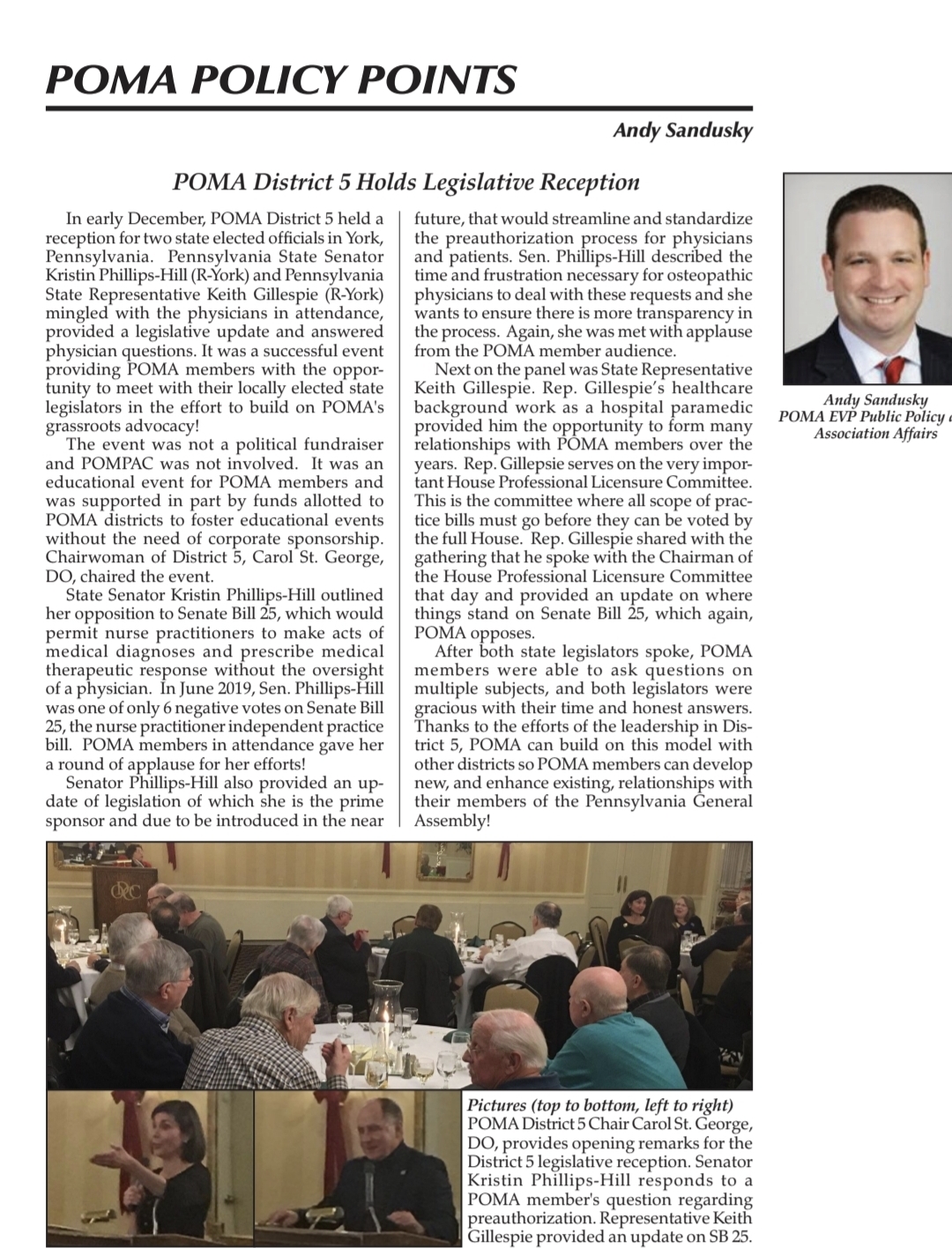
Advocacy is one of the member benefits of POMA that is repeatedly rated as the best or most-valued resource that POMA provides. This page from the Winter 2019 issue of the JPOMA highlights some of the work being done seven years ago by POMA staff on behalf of POMA members. It may not be a surprise to you that one of the main topics of conversation was Senate Bill 25, the bill that provides nurse practitioners with independent licensure. POMA has been fighting this legislation for a long time. And, it must be pointed out that the person who wrote this article is now the Chief Executive Officer for POMA!
|
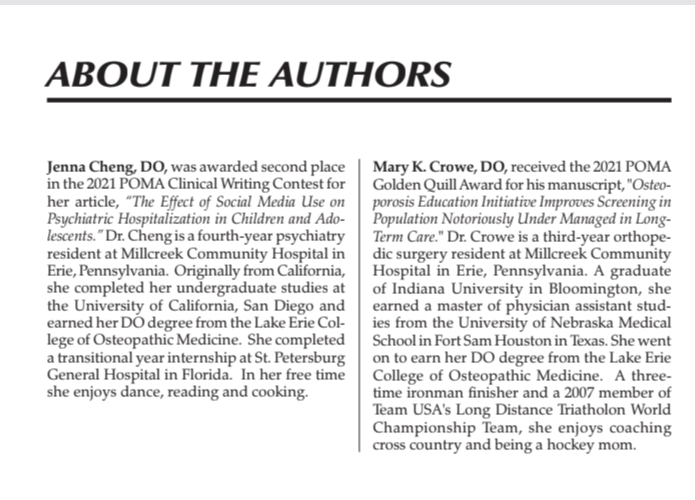
In this case, quite literally new again. This page from the Summer 2021 issue of the JPOMA announces the first- and second-place winners of the clinical writing contest, also known as the Golden Quill Award. The Journal of the POMA, after a several-year hiatus, has relaunched this clinical writing contest, with the winners being named in this issue of the JPOMA. Congratulations to all our past and present winners of the Golden Quill Award!
|
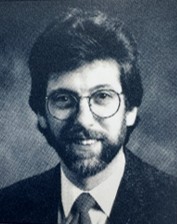
The subject of this issue’s Guess Who likely did not imagine settling down in Pennsylvania. Raised on a dairy farm in Iowa, he and his wife came to Pennsylvania for a medical school rotation and never left. A Past President of both the POMA and the ACOFP, he has been a champion for osteopathic physicians over his decades-long career and fought hard for DOs to obtain equal recognition in the state of Pennsylvania. Recently retired, he is still a member of the Board of Directors for the POMA Foundation.
Click here if you can identify this longtime leader and advocate for osteopathic medicine in Pennsylvania!
The answer will be revealed in JPOMA's February 2027 issue.
(Answer to JPOMA's June 2026 Guess Who? - Oscar John Snyder, DO)
|
Members of our osteopathic community are the best and brightest. We honor the passing of these POMA members. We recognize their contributions and legacies to the profession and to POMA. To friends and families, we offer sympathies.
|
Publication Notes
Disclaimer
Views expressed in The Journal of the Pennsylvania Osteopathic Medical Association are solely those of the authors and do not necessarily reflect the opinions of the editorial board, The JPOMA, or POMA unless specified.
Letters to the Editor
We welcome your thoughts and feedback. Letters to the Editor may be submitted to [email protected].
About the JPOMA
Frequency
The Journal of the Pennsylvania Osteopathic Medical Association will be published three times a year: February, June, October.
Submission Information
The Journal of the Pennsylvania Osteopathic Medical Association is a safe space for all DOs to have a voice and be heard. Opportunities to contribute in all content areas are open to all osteopathic medical students, residents, and physicians. Share your thoughts, ideas, and submissions via email to [email protected].
Submission Deadlines
The Publications Committee will review submissions one month prior to publication. The rolling submission deadlines are as follows:
- January 15 for the February issue
- May 15 for the June issue
- September 15 for the October issue
Editorial Board
The POMA Publications Committee serves as the editorial board for the Journal of the Pennsylvania Osteopathic Medical Association. The committee is chaired by Joseph Zawisza, DO, and includes Richard Donze, DO; Katherine Galluzzi, DO; Samuel Garloff, DO; Porsche Lee, DO; Zachary Mendola, LECOM, OMS-IV; Katherine Morrison, PCOM, OMS-II; and Regan Shabloski, DO. POMA President Angela Zawisza, DO, serves as champion of POMA's Communications Pillar.
|
|
|